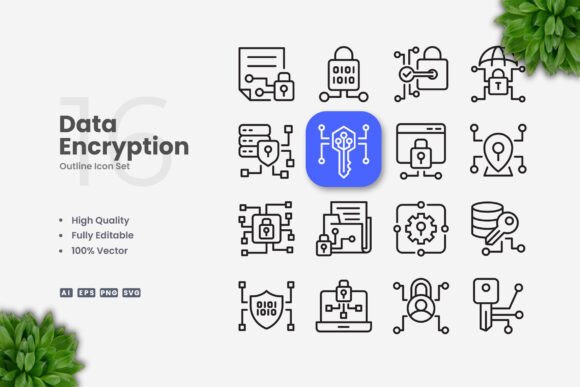
Data Encryption Icons: A Designer's Review for Embroidery
When I first pulled up the Data Encryption Icons on my screen, my immediate reaction wasn't about how they would look on a website mockup, but rather how they would translate into thread. As someone who spends half their life digitizing and the other half stitching, I have a specific lens through which I view graphics. The product description promises a "simple and clean icon design," which is music to an embroiderer's ears. In the world of machine embroidery design, simplicity often equals longevity. Complex gradients and microscopic details that work beautifully in a digital embroidery file for print can turn into a tangled mess of underlay and broken needles when hit with high-speed stitching.
The visual personality of these icons suggests a modern, tech-forward aesthetic. They are built on strong geometric foundations, likely relying on clear lines and distinct shapes to convey security and protection. For a designer, this is the sweet spot. When you are planning a custom apparel line or a series of boutique products, you need imagery that reads instantly from a distance. A potential customer walking past a craft fair booth shouldn't have to squint to understand that a padlock or shield represents data safety. These Icons and Graphics seem to possess that necessary clarity, making them ideal candidates for everything from corporate swag to personalized tech accessories.
Real-World Application: The Tech-Savvy Tote
To truly test the viability of this design, I imagined a specific real-life scenario: creating a limited run of canvas tote bags for a local co-working space or a cybersecurity conference. The goal was to produce a handmade product that felt professional enough to be sold as premium merchandise but retained the charm of being artisanal. I envisioned placing one of the Data Encryption Icons centrally on a heavy-duty cotton canvas bag.
In this context, the "clean" nature of the design becomes its greatest asset. Canvas has a distinct fabric texture that can swallow up fine details if the stitch count is too low or the density is too sparse. However, because these icons appear to rely on bold strokes rather than intricate shading, they should hold up well. I pictured using a satin stitch for the outlines to give a shiny, premium finish, potentially filling larger areas with a tight fill stitch if the digitization allows. The result would be a finished product that looks crisp against the matte background of the fabric. It transforms a simple grocery carrier into a statement piece about digital privacy, appealing directly to the target demographic of developers and IT professionals.
Beyond totes, I can see these working exceptionally well as an embroidered patch. Patches are incredibly popular right now among Etsy sellers and small shop owners. If you digitize these icons with a merrowed edge or a clean cut border, they become versatile assets. A user could iron them onto a denim jacket, a laptop sleeve, or a backpack. This versatility increases the perceived value of the design assets significantly. Instead of selling just a digital file, a craft business owner could sell the physical application, charging a premium for the labor and materials involved in creating a high-quality custom apparel item.
Navigating Fabric Challenges and Stitch Density
While the design looks promising on paper, practical embroidery always requires a reality check regarding materials. One area where I would proceed with caution is stitch density. The description mentions the ability to "change color or edit stroke weight," which implies these are vector-based or easily editable files before digitization. If you are working with stretchy fabrics like jersey knits for a sweatshirt embroidery project or baby embroidery on a onesie, heavy density can cause the fabric to pucker or distort.
If you are adapting these Data Encryption Icons for a cap or a curved surface, the structural integrity of the stitch-out is paramount. Caps are unforgiving; if the design is too wide or the columns of stitching are too long without proper tacking, the logo will warp over time. I would recommend testing a running stitch outline version for smaller applications, such as the corner of a collar or a pocket detail on an apron. This reduces bulk while maintaining the recognizable shape of the icon.
Furthermore, consider the hoop size constraints. If you intend to use these on small items like kitchen towels or baby bibs, you might be limited to a 4x4 hoop. Ensure that the smallest details within the encryption symbol—perhaps the keyhole in a lock or the bits in a binary stream—are large enough to be stitched cleanly at that reduced scale. Tiny lettering or micro-details often disappear into the stabilizer or get lost in the nap of a towel. Always run a test on scrap fabric that matches your final material. Check how the thread colors contrast against dark versus light backgrounds. A white icon on a black hoodie looks striking, but ensure your digitizing software has accounted for pull compensation so the letters or shapes don't gap open.
Building Trust and Brand Consistency
For commercial embroidery projects, the choice of imagery directly impacts customer trust. Data encryption is a serious topic; it implies safety, reliability, and professionalism. Using a clip-art style graphic that looks amateurish can undermine the message. The Data Encryption Icons offer a level of sophistication that helps elevate brand consistency. Whether you are creating holiday embroidery gifts for a tech-loving family member or producing uniforms for an IT firm, the clean lines convey competence.
From a marketing perspective, these designs also excel in printable mockup creation. Before you even stitch a single thread, you can place these icons on digital mockups of hoodies, mugs, or tote bags to gauge buyer engagement. This is a crucial step for digital product sellers and craft business owners who need to validate a product idea before investing in inventory. The universal language of these symbols means they have broad appeal, transcending specific niches to fit into general "geek chic" or modern minimalist trends.
Final Verdict and Practical Notes
As a reviewer looking at the potential of Data Encryption Icons for real-world production, I see a high ceiling for creativity. They are not just decorative; they are functional symbols that tell a story. However, success lies in the execution. Do not assume the file is ready to stitch straight out of the download without inspection. Since the description notes you can edit stroke weight, take advantage of that. Thicken lines slightly if you are working with textured fabrics like Terry cloth for towels, or thin them down for delicate silks.
Always confirm the licensing terms before selling finished products or using these in client work. While the description suggests versatility for print and web, commercial embroidery rights sometimes differ. Finally, remember that the best embroidery project is one that respects the limitations of the machine and the fabric. Test your tension, choose the right stabilizer for the job, and let the clean geometry of these icons do the heavy lifting in your design composition. With the right approach, these graphics can become the cornerstone of a profitable and visually stunning product line.